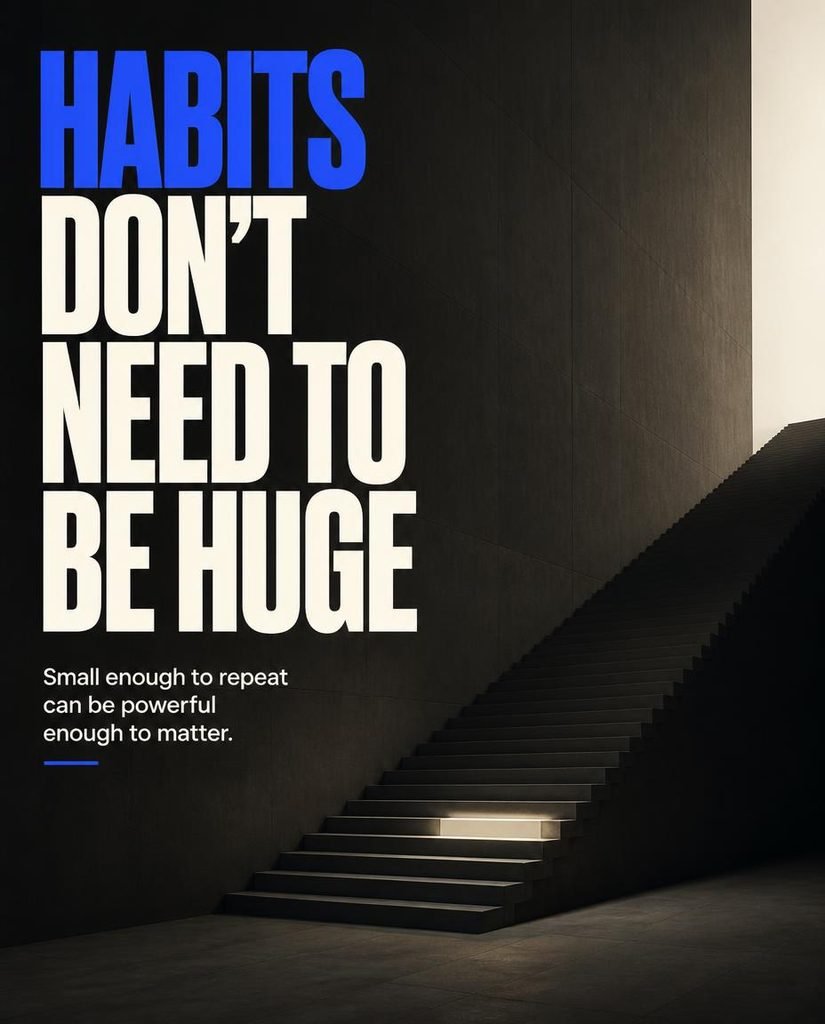
We often underestimate small actions because they don’t feel dramatic. We think that if a habit isn’t impressive, it doesn’t count. But that’s a trap.
The goal isn’t to create the most impressive routine. It’s to create one you can actually live with.
Why Small Habits Matter
A habit doesn’t have to be impressive to matter. It just has to be repeatable.
Small actions become meaningful when they become part of who you are. Drinking a glass of water before every meal. Taking a 15-minute walk. Eating one meal without distractions. These aren’t dramatic changes. But they are repeatable. And repeatability is what builds identity.
The power of small habits lies in their simplicity.
Small habits are the foundation of lasting change.
The Problem With Big Goals
When we set huge goals, we often fail because they require a level of motivation and willpower that we can’t sustain. We start strong, but by day three or four, the motivation fades, and the big goal feels impossible.
Small habits are different. They don’t rely on motivation. They rely on repetition. And repetition doesn’t care how you feel. It only cares that you show up.
How to Build Small Habits That Stick
1. Start Ridiculously Small
Don’t try to overhaul your entire life in one day. If you want to start walking, start with 5 minutes. If you want to drink more water, put a bottle on your desk. Make the habit so small that it feels almost impossible to fail.
2. Attach It to an Existing Routine
The easiest way to build a new habit is to attach it to something you already do. For example: “After I brush my teeth, I will drink a glass of water.” This is called habit stacking, and it uses your existing routines as a trigger for the new behavior.
3. Focus on Consistency, Not Intensity
The goal isn’t to do more. The goal is to do it regularly. A 5-minute walk every day is better than a 2-hour workout once a week. Consistency is what turns an action into a habit.
The Identity Connection
This is where the Identity Shift Method comes in. You don’t become a person who takes care of their body by doing one big thing. You become that person by doing small things, repeatedly, until they become automatic.
But here’s the catch: small habits don’t feel impressive at first. You might do them for a week and wonder if they’re even working. That’s normal. The brain doesn’t reward small, consistent actions with instant dopamine the way it does with big, dramatic changes. But that’s exactly why small habits work. They fly under the radar of your old identity. They don’t trigger the resistance that big goals do. And over time, they quietly become who you are.
Research on habit formation shows that it takes an average of 66 days for a new behavior to become automatic. The key variable isn’t intensity – it’s consistency. People who performed the same small action daily were far more likely to still be doing it months later than those who attempted large, sporadic changes.
When you repeat a small action, you are casting a vote for your new identity. Every vote counts. And over time, those votes add up to a new self.
Conclusion
Small doesn’t mean meaningless. A habit becomes powerful when it becomes repeatable.
You don’t need a dramatic routine. You need something realistic enough to repeat. The best system isn’t necessarily the most ambitious. It’s the one that survives real life.
Start small. Stay consistent. And let your habits build the person you’re becoming.
Ready to build habits that actually last?