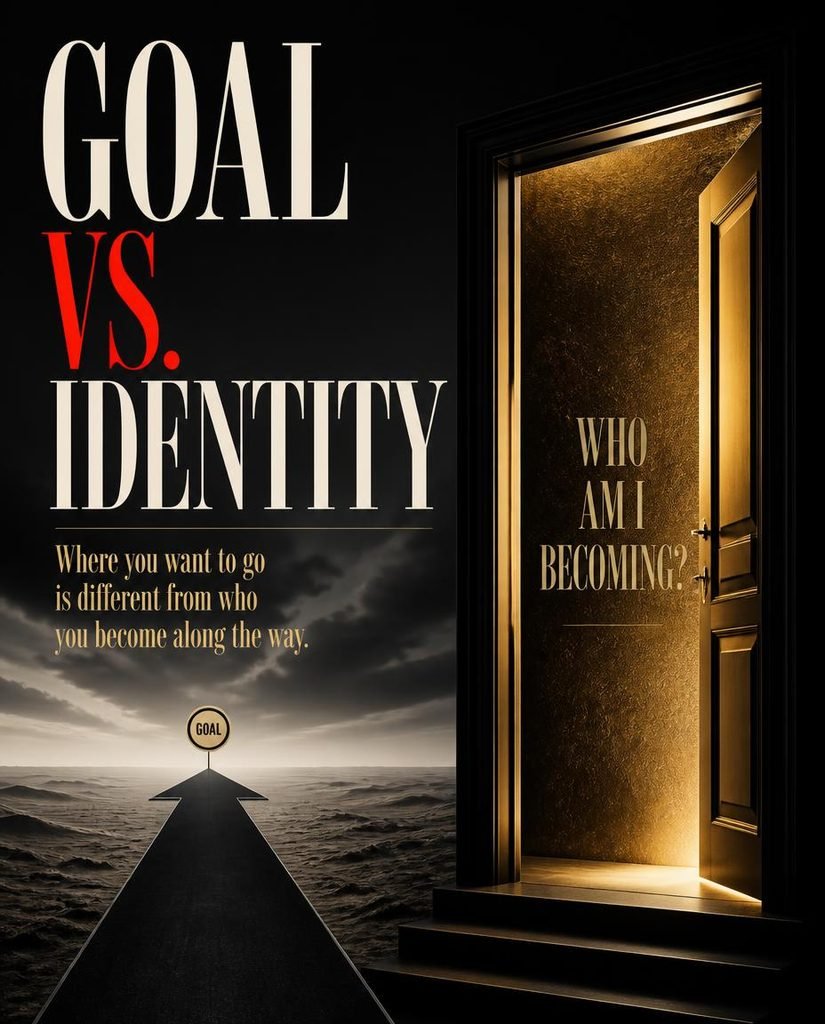
Goal vs identity – it sounds like a simple distinction, but it changes everything about how lasting change actually works.
And that difference turns out to matter more than almost anything else.
The Problem With a Goal vs Identity Approach
A goal says what you want to achieve. “I want to lose ten kilograms.” That sounds specific and measurable, and it is. But it’s also temporary. Once the goal is reached, what happens next? Most people slide right back into old habits, because nothing underneath them changed.
Think about how many people lose weight every year and then gain it back. They achieved the goal. So why didn’t the change stick? Because the goal was achieved by a version of themselves they never actually became. Motivation is not a plan – and a goal isn’t an identity.
Goal vs Identity: What Identity Really Means
Identity says who you’re becoming. “I am someone who takes care of their body.” That’s not a destination. It’s a way of moving through the world. Every choice follows from it, not toward it. You don’t decide to eat well because you’re trying to hit a number. You eat well because that’s who you are – the same way you brush your teeth in the morning without thinking of it as a goal.
This is why the person you believe you are shapes everything. Behavior follows identity, not the other way around. When identity changes, behavior changes with it. When only the goal changes, nothing underneath moves.
Why Both Matter (But Differently)
Goals are useful. They give you direction and a way to measure progress. But they only work when they sit on top of an identity that supports them.
Without identity, a goal is a temporary target. With identity, a goal becomes a milestone on a much longer path.
Here’s the difference in practice:
Goal-focused thinking: “I’m going to lose weight this year.”
Identity-focused thinking: “I’m someone who takes care of my body – and weight loss is a side effect of that.”
The first version asks you to fight yourself until the goal is met. The second version asks you to become someone new – and then to keep being that person.
“This is the goal vs identity distinction in practice – one points to a destination, the other to a way of being.”
The Trap of Letting Goals Define You
There’s a deeper problem with goals that most people miss. When you define yourself by a goal, you’re tying your identity to an outcome you don’t fully control. If you hit the goal, you’re temporarily successful. If you miss it, you’re temporarily a failure.
That’s a terrible foundation for lasting change. It’s also why self-criticism doesn’t create change — it just keeps you stuck in a cycle of chasing the next goal and feeling worse when you don’t reach it.
When identity is the foundation, success and failure become information, not verdicts. You stop asking “did I hit the goal?” and start asking “who am I becoming?” That’s what makes a setback is information rather than a verdict.
“The goal vs identity trap is subtle: when you define yourself by a goal, you tie your worth to an outcome.”
How to Shift From Goal to Identity
If you want lasting change, stop leading with the goal. Lead with the identity.
1. Ask a Better Question
Instead of “what do I want to achieve?” ask “who do I want to become?” The first answer is a target. The second is a direction.
2. Act Like That Person Now
Don’t wait until you’ve reached the goal to start being that person. Start now, in small ways. If you want to become someone who moves every day, take a fifteen-minute walk today. Habits don’t need to be huge – they just need to be repeatable.
3. Let the Goal Serve the Identity
Keep the goal, but make it secondary. The goal is the compass. The identity is the road. If the goal conflicts with the identity, the identity wins.
4. Measure Identity, Not Just Outcome
Instead of tracking only the number on the scale, track how often you act like the person you’re becoming. Every small action is evidence. Over time, that evidence builds the identity.
Why This Matters for Lasting Change
Goals end. Identity remains.
Every diet eventually ends. Every challenge wraps up. Every burst of motivation fades. But a person who has become someone new doesn’t need another goal to keep going. They just live as that person, the same unremarkable way you live as yourself right now.
That’s what habits don’t need to be huge really means – not that the goal is small, but that the identity behind it is sustainable.
One Question to Sit With
If you removed every goal you’ve set for yourself, who would you still be trying to become?
Conclusion
A goal says what you want to achieve. Identity says who you’re becoming. Both matter – but only one of them survives the end of the plan.
Stop chasing goals that leave you empty when they’re done. Start building an identity that carries you forward without needing another challenge to keep going.
The goal vs identity question isn’t about which one to choose – it’s about which one leads.
Want to stop chasing goals and start becoming someone new? The Identity Shift Method is where to start.
If this resonates with you, start with the free 5-Minute Identity Check. Download the free PDF here.
And if you want the complete system — the book, workbook, journal, and action guide — get The End of Dieting Collection
Mind Before Body.